Shipping Material & Testing
View this service

As the world faces the challenge of cutting greenhouse gas emissions and transitioning away from fossil fuels, biofuels stand out as a compelling solution for a cleaner and more sustainable source of energy.
Unlike fossil fuels, which took millions of years to form, biofuels can be produced relatively quickly and have the potential to significantly reduce greenhouse gas emissions. Derived from organic matter called biomass, which includes plants, algae and animal waste – Biofuels are renewable source of energy available in solid, liquid and gaseous forms. They serve as lower-carbon alternatives to fossil fuels, particularly in transportation and heating. Biofuels not only help reduce our reliance on petroleum but also create new opportunities in agriculture, waste recycling and greener environment.
Globally, biofuels have gained significance as countries seek to strengthen energy security and address environmental challenges. To encourage their use several countries have put forth various policies, incentives, and subsidies tailored to their domestic needs. In India, biofuels are also seen as a effective tool for rural development and generating employment, with a strong emphasis on cultivating indigenous feedstock.
The concept of using plant-based fuels is not new. In fact, the first internal combustion engine in the 19th century ran on plant-based oils – Rudolf Diesel’s 1900 Paris Exposition engine used peanut oil as fuel. However, with the discovery and mass production of cheap petroleum, fossil fuels quickly took over and dominated the global energy market, sidelining biofuels for more than a century.
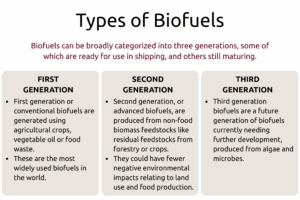
Biofuels regained attention after 1970s Oil Crisis. Rising oil prices, global warming, greenhouse gas emissions and energy security led to renewed interest in biofuels like ethanol and biodiesel. Today, biofuels are categorized into generations based on their feedstock – First Generation Biofuels derived from food crops such as corn, sugarcane, soyabean and vegetable oil. Second Generation is produced from non-food biomass like agricultural residues, wood waste and energy grasses. Third Generation biofuels are based on algae, cyanobacteria and aquatic organisms.
This evolution shows our growing ability to turn natural resources into cleaner energy without harming ecosystem.
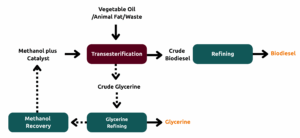
Biofuel production is all about turning organic materials into energy-rich fuels such as bioethanol, biodiesel, advanced biofuel, drop-in fuels, and bio-CNG. Each type comes from different sources and processes, but the goal is same: cleaner, renewable energy.
The revised Renewable Energy Directive sets ambitious goals for transforming transport sector, including maritime and aviation. By 2030, Eu countries must ensure that either 29% of all transport energy comes from renewable sources or that the carbon intensity of transport fuels is cut by 14.5%. Within this, a 5.5% share is reserved specifically for renewable hydrogen and advanced biofuels such as Second-Generation Ethanol and bio-CNG. While these targets are a crucial step towards decarbonization, meeting them poses several technological, economic, and policy challenges.
In the maritime industry, biofuels are making waves. Hydrotreated Vegetable Oil (HVO) and Fatty Acid Methyl Esters (FAME) are being used as direct replacements for Marine Diesel Oil and Heavy Fuel Oil. NORDEN and BHP partnered on a voyage using 100% biofuel (B100) to reduce carbon emissions, with NORDEN marking Singapore’s first-ever full 100% biofuel bunkering in May 2024. Meanwhile, global shipping giants like Maersk, CMA CGM and Hapag-Lloyd have signed agreements with Nestlé to ship its cargo using biofuel powered vessels – an initiative that will significantly cut greenhouse gas emissions for Nestlé from shipping.
The maritime industry is undergoing a significant transformation as biofuels take on an increasingly prominent role in the global energy landscape. Recent studies point to steady growth in the production of liquid biofuels and biogases — primarily ethanol, FAME (Fatty Acid Methyl Esters), and HVO (Hydrotreated Vegetable Oil) as the sector aligns more closely with EU sustainability standards. This upward trend reflects mounting pressure on shipping to decarbonize and the rising confidence in low-carbon fuel options.
What’s particularly noteworthy is the increasing use of advanced feedstocks – materials that do not compete with food crops and are often sourced from waste or residue offer a more sustainable pathway for scaling biofuel production. By reducing competition with food crops and utilizing resources that would otherwise be discarded, advanced feedstocks strengthen the environmental credibility of marine biofuels and help shipping companies meet tightening regulatory requirements.
The impact of this transition is especially visible in major bunkering hubs such as Singapore and Rotterdam, where sales of bio-blended marine fuels have surged in recent years. In Singapore, the most common blend sold has been B24, while Rotterdam has favoured a slightly higher blend, B30. Both blends typically combine FAME (Fatty Acid Methyl Ester) with VLSFO (Very low Sulphur Fuel Oil) to deliver a cleaner-burning alternative that reduces lifecycle emissions without requiring major engine modifications—an attractive proposition for shipowners seeking practical decarbonization solutions.
Together, sales from these two ports are estimated to represent about half of all biofuel supplied to the global shipping industry, highlighting their growing importance in the sector’s transition towards greener energy sources.
Since 2023, B24 and B30 blends have consistently traded at higher costs, yet shipowners are increasingly willing to absorb the difference—an indication that environmental compliance, customer expectations, and long-term sustainability goals are beginning to outweigh short-term fuel economics.
This trend underscores shipowner’s increasing willingness to invest in sustainable fuels as environmental regulations tighten and the maritime industry pushes towards decarbonization.
In conclusion, the rapid expansion of biofuel production and adoption shows that the maritime industry is taking real steps towards a cleaner and more sustainable future. The surge in bio-blended fuel sales at key hubs such as Singapore and Rotterdam demonstrates not only growing market confidence but also a tangible shift in operational practices towards lower-emission alternatives.
Although the cost, availability of feedstocks and technology remain a challenge but the continued rise in demand highlights shipowner’s commitment to move the shipping world closer to its goal of decarbonization.