
Sustainability Initiatives
View this service

Established by Regulation (EU) 2024/3012 and in force since 6 December 2024, the EU Carbon Removals and Carbon Farming (CRCF) framework provides a voluntary certification system for permanent carbon removals, carbon farming and carbon storage in products. It introduces common quality criteria, monitoring and reporting requirements, and independent verification to strengthen confidence in certified outcomes and support investment. In 2026, implementation has advanced through new methodologies, assessments of certification schemes, and preparations for the Buyers Club’s first purchases.
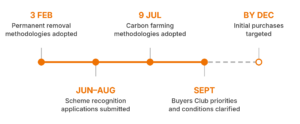
Figure 1: Selected milestones in 2026. Schematic timeline; the dashed segment denotes a future target.
The September Buyers Club bulletin describes a working group formed by prospective buyers to share non-confidential project information and prepare potential transactions. Initial purchases will focus on permanent removals covered by CRCF methodologies, particularly biogenic emissions capture with carbon storage (BioCCS). The Commission convenes the initiative, while participating buyers retain responsibility for due diligence, purchasing and contractual decisions. [1, 2]
The bulletin also establishes a clear prerequisite: a project must be certified through a CRCF-recognised scheme before a Buyers Club purchase is announced. The Commission aims to support initial permanent-removal purchases by December 2026 and longer-term offtake agreements that give projects sufficient revenue certainty to reach a final investment decision. The December date remains a target; it does not establish that transactions have been completed. [1, 2]
For developers, the practical opportunity is to bring project readiness, certification and buyer engagement together. For purchasers, the next decisions concern the specific project, contractual terms and evidence supporting the proposed certified outcome. This is an implication of the initiative’s published purchasing model. [1, 2]
The Commission’s published list records eight applications submitted between June and August 2026, including our partners, Isometric, Rainbow, Puro Earth and Oncra, with technical assessments shown as in progress. Formal recognition follows an assessment against the applicable methodologies and governance requirements. Schemes must provide for regular audits by accredited or recognised certification bodies and maintain reliable registries that support traceability and prevent double counting. [3]
On 9 July, the Commission adopted carbon-farming methodologies covering agriculture and agroforestry on mineral soils, rewetting and restoration of peatlands and other organic soils, and afforestation. The rules are intended to make certification consistent across the EU and support financial rewards for farmers and land managers. The announcement makes scheme applications conditional on the delegated regulation entering into force. [4]
For permanent removals, Delegated Regulation (EU) 2026/285 covers direct air capture with carbon storage (DACCS), BioCCS and biochar carbon removal. The methodologies adopted on 3 February address the quantification of removals, storage durability, leakage and liability. Together, these requirements provide the technical basis for assessing the pathways prioritised in the initial Buyers Club pipeline. [1, 5, 6]
Formal scheme recognition, project certification and purchase announcements are the next developments to track. Each establishes something different: recognition confirms a scheme’s conformity, certification assesses a project against the applicable rules, and a purchase records a commercial commitment. For assurance teams, this means checking the relevant methodology, recognition decision and project evidence before describing an outcome as CRCF-certified. This is an interpretation of the published recognition and purchasing requirements. [1–3]
Normec Verifavia specialises in sustainability verification and can support organisations in assessing carbon removal projects against the requirements of the EU Carbon Removal Certification Framework (CRCF).
Contact us at: [email protected]