News

Reduction of GHG Emissions

Reduction of GHG emissions 

MEPC 83 approved a new Chapter 5 and consequential amendments to other regulations in MARPOL Annex VI, the IMO Net-Zero Framework. The amendments were approved by a majority vote.
The amendments are due for adoption at an extraordinary MEPC session in October 2025. Adoption requires acceptance by two-thirds of the parties to MARPOL Annex VI representing at least 50% of the gross tonnage of the world’s merchant fleet. This approval comprises of a set of mid-terms GHG reduction measures which will enter effect on March 1, 2027, and are designed to significantly reduce the carbon intensity of international shipping. 

The new regulations apply to all ships above 5000 GT with a few exemptions’ cases – 

  • Ships that operate domestically/exclusively within the waters of their flag state – vessels engaged in domestic trade only.
  • Platforms such as FPSOs, FSUs and drilling rigs, and semi-submersible vessels.
  • Vessels operated by non-mechanical means.
  • Non-commercial/Government vessels. 


GHG Fuel Intensity (GFI) Standard 

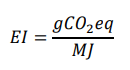
  • The requirements are based on a GHG fuel intensity (GFI) metric, which is the well-to-wake GHG emissions per unit of energy used on board a ship – i.e. the amount of Carbon Dioxide equivalent (the equivalent CO2 emissions from Methane and Nitrous Oxide as well as CO2 emissions) in grams per mega joule of energy the fuel or energy source provides.  This also includes electricity delivered to the ship, wind propulsion and solar power. The attained GFI is to be reported annually by the ship as part of the DCS. 
  • The GHG fuel intensity (GFI) metric is the well-to-wake GHG emissions per unit of energy used on board a ship. It includes electricity delivered to the ship, wind propulsion and solar power.  

Each ship will be required to calculate an annual GFI, which is a weighted average of the energy sources it uses of the form – 
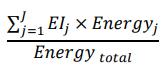
Where EIj is the GHG intensity of an energy source j, expressed as: 
This is compared to a target annual GFI, GFIT as follows: 

Where ‘ZT’ represents a percentage reduction factor to be applied each year to a reference GFI, GFI2008 which is the reference GFI of the fleet average in 2008 stated as 93.3 gCO2eq/MJ. 

Two tiers of requirements are set on the annual attained GFI for a ship: a Base target and a more stringent Direct Compliance target. Each ship is required to meet the Direct Compliance target.  


Reduction Targets 

  • Reduction Targets: The GFI reduction factors have been established for the years 2028 to 2035, with a base target of 4% in 2028, escalating to 30% by 2035. A more stringent direct compliance target will also be enforced. 
  • The aim is to achieve net Zero emissions by 2050. 

 The Base target for 2040 is set to 65%. 

If a ship has a GFI lower than the Direct Compliance target, it will receive Surplus Units (SUs). Conversely, if a ship has a GFI above the Direct Compliance target, it has a negative compliance balance:  

  • For a GFI between the Base and the Direct Compliance targets, a ship generates a Tier 1 compliance deficit. 
  • For a GFI above the Base target, a ship generates both a Tier 1 compliance deficit (for the emissions between the Base and the Direct Compliance targets) and a Tier 2 compliance deficit (for the emissions above the Base target). 

To handle deficits and surpluses, the requirements include several compliance approaches. graph

To facilitate compliance, the regulation has introduced a system of Surplus Units (SUs) and Remedial Units (RUs): 

  1. Surplus Units: Ships achieving a GHG Fuel Intensity below the Direct Compliance target (set by IMO) will earn Surplus Units (SUs), which can be transferred to ships with a compliance deficit, traded or banked for later use within the two subsequent calendar years. Similar to trading FuelEU’s Compliance balance if the vessel has positive compliance balance.
  2. Remedial Units: Ships exceeding the Direct Compliance target will incur compliance deficits, which can be offset by purchasing RUs priced at $100 per tonne for Tier 1 and $380 per tonne for Tier 2.
  • A ship can balance its Tier 2 compliance deficit with SUs from other ships, or it can buy Remedial Units (RUs) from the IMO Net-Zero Fund. The Tier 1 compliance deficit can only be compensated by Tier 1 RUs.

The regulations are designed in this manner so that most ships will use sufficiently low-GHG emission fuels to reach the Base target and then buy Tier 1 RUs. Alternatively, they can buy SUs to cover the Tier 2 compliance deficit and then acquire Tier 1 RUs. This ensures that a certain amount of revenue is generated for disbursement purposes, while ensuring that the fleet achieves at least the Base target. 

Incentives for Zero or Near Zero GHG Emissions Fuels and Technologies  

Within these regulations there is provision for financial reward for ships using a Zero or Near Zero GHG emissions fuel or technology (ZNZ). The amount of the reward is to be determined, however, a criteria has been agreed such that ZNZs include technologies, fuels and energy sources based on their GFI.  

The GFI threshold for ZNZs is initially set at 19.0 gCO2eq/MJ for an initial period until 31 December 2034 i.e. a fuel with a GFI below this will be initially considered as a ZNZ eligible for financial reward.  

The regulations state that from 1 January 2035, the threshold will become 14.0 gCO2eq/MJ.  

There is however, a scope for MEPC to agree on other ZNZs and a clause calling for MEPC to define the reward no later than 1 March 2027 and every 5 years thereafter 

Fueling the Future: Shipping’s Green Rewards Flow 

  • All-In for Net Zero: Revenues from the sale of Reduction Units (RUs) will directly feed into the IMO Net-Zero Fund, which is a dedicated global climate fund managed by the IMO. 
  • No State Cuts: Unlike many levies, none of the proceeds will be diverted to IMO member states. Every dollar flows straight from shipping companies to the Fund.
  • Reinvesting in Innovation: A portion of the Fund will be recycled back into the industry to reward the early adopters who use zero or near-zero emission fuels and energy sources.
    Countdown to Reward Mechanism: The incentive framework of how much will be rewarded will be finalized by 1 March 2027. 


GFI Compliance Timeline at a Glance 

  •  1 March 2027 : Regulation officially enters into force & the decarbonization era moves into implementation. 
  • March to April 2027 : MEPC to recognize eligible fuel certification schemes setting the stage for credible and traceable fuel pathway validation. 
  • Autumn 2027 

-Certified fuel pathways expected. 

-Ships must submit amended SEEMP detailing how additional fuel data will be collected for verification. 

-Mandatory registration of ships in the IMO GFI Register begins. 

  • January to December 2028 : Ships begin collecting fuel-related data as per the amended SEEMP for the first full reporting year. 
  • By January 2029 : Ships submit collected data for GFI and economic compliance review  
  • 1 January to 31 March 2029 : Ships report to their Administration or Recognized Organization (RO) the following parameters for 2028:
    – Attained GFI
    – Compliance balance
    – Verified fuel-related data 
  • 1 April to 30 June 2029 : Administration/RO completes data verification and uploads it to the GFI Register. 
  • 1 to 31 July 2029 : Ships must select and implement a compliance balancing approach in the GFI Register, including any decisions on Surplus Units (depending on over/under-compliance). 
  • 1 to 31 August 2029 : The GFI Register issues account statements, detailing all transactions which is made accessible to the Administrations/ROs. 
  • 1 to 30 September 2029 :
    Final compliance checks: 
  • Administration/RO verifies if compliance actions are completed and any deficits are balanced. 
  • Statement of Compliance issued and uploaded to the Register by end of October 2029. 


Fuel with a Future: Certified, Labelled & Ready for Change 

  •  Certified to Qualify for Global Approval & Compliance: All GHG emission factors and sustainability criteria must be certified under an IMO approved Sustainable Fuels Certification Scheme (SFCS). The MEPC will approve eligible SFCSs, with the IMO publishing the official list by 1 March 2027 and update it regularly.
  • Fuel That Talks: Each sustainable fuel must come with a Fuel Lifecycle Label (FLL) detailing emissions and sustainability info which must accompany the Bunker Delivery Note (BDN) at delivery.
  • Framework Under Review: The entire IMO Net-Zero Framework will undergo a comprehensive review every five years, opening the door to policy evolution and stronger climate action.
  • Next on the Radar: Future reviews may include changes to the GFI (GHG Fuel Intensity) reduction targets and expand coverage to ships as small as 400 GT.
  • Work in Progress: There’s significant groundwork ahead before full enforcement, especially in shaping the detailed guidelines for the measures in this regulation. 

Data Collection System (DCS) Enhancements 

The reporting of the GFI will be enabled by expanding the current DCS scheme.  

  • MEPC 83 agreed to enhance the accessibility of DCS data, ensuring greater transparency in fuel oil reporting. 
  • The definition of “voyage/underway” was clarified to improve data collection accuracy. It has been changed to: 

Therefore, the voyage definition has been changed from: 

Departure / Unberthing to Arrival / Berthing TO FAOP / COSP to EOSP 

  • Each ship will be required to update its data collection and reporting plan (SEEMP Part II) to include the necessary elements to calculate the GHG intensity. The plan must be verified and kept on board together with a Confirmation of Compliance prior to the start of the first reporting period, which is 1 January 2028.
  • Energy Efficiency InitiativesThe MEPC 83 session also saw a review of the existing energy efficiency parameters 

Review of the IMO short-term GHG measures  

Carbon Intensity Indicator (CII) 

  • The first phase of the review of the CII,  Ship Energy Efficiency Management Plan (SEEMP), and Energy Efficiency Existing Ship Index (EEXI) was completed.
  • The review identified no gaps in the EEXI framework, while the CII reduction factors have been set for the upcoming years.
  • Within the CII regulatory framework, a series of reduction factors compared to reference CII values for 2019 known as ‘Z’ factors which are communicated in the 2021 Guidelines on the operational carbon intensity reduction factors relative to reference lines (CII reduction factors guidelines, G3) (MEPC.338(76)) where reduction factors as a percentage reduction compared to 2019 were given for 2023 to 2026 as follows: 
Year Reduction Factor Relative to 2019
2023 5%
2024 7%
2025 9%
2026 11%
2027 13.625%
2028 16.25%
2029 18.875%
2030 21.5%


EEDI Calculation – Sea Trial: EEDI/EEXI 

MEPC 83 agreed to refer to both the updated ISO standard 15016:2025 and the ITTC Recommended Procedure for the conduct of sea trials in the EEDI survey and certification guidelines. Within a transition period, the ISO standard 15016:2015 can be used if the sea trial is conducted before 1 May 2026. 

Special Areas and Emission Control Areas (ECA) 

  • The North-East Atlantic has now been designated as an ECA for SOx, PM, and NOx, with entry into force expected in 2027.
  • This designation will impose stricter emissions standards on ships operating in the region.

Measurement of non-CO2 GHG emissions 

  •  MEPC 83 finalized guidelines for test-bed and onboard measurements of methane (CH4) and nitrous oxide (N2O) emissions from marine diesel engines which can serve as a basis to apply emissions and slip factors. It is also expected that these guidelines will become accepted under the EU ETS and FuelEU Maritime regulations.
  • A Correspondence Group was established to further develop the framework on the measurement and verification of non-CO2 GHG emissions, reporting to MEPC 84 in spring 2026. 

Blending Sustainability: Biofuels Aboard Bunker Ships  

Biofuel Onboard, Legally Backed: An interim circular has been approved by MEPC, allowing the carriage of biofuel blends containing up to 30% biofuel on conventional bunker ships. 
  • No New Design Needed: This applies to bunker vessels that are already certified as oil tankers under MARPOL Annex I, and there is no need for additional reclassification. 
  • A Step Toward Greener Refuelling: This decision facilitates low-carbon fuel transport, enabling a smoother transition toward sustainable marine energy options.
  • Interim Today, Standard Tomorrow: While currently provisional, this move is paving the regulatory path for broader acceptance of biofuel blends in maritime operations

Capturing Carbon at Sea: OCCS Sailing Towards 2028 

  • OCCS Agenda: The IMO has officially approved a work plan to develop a regulatory framework for Onboard Carbon Capture and Storage (OCCS).
  • From Ship to Shore: The framework will address both onboard (ship) and onshore (land-based) aspects, ensuring a holistic integration of OCCS across the maritime value chain.
  • Aligned with Existing Systems: OCCS will be considered in the context of current and future regulations, including synergy with mechanisms like the EEDI (Energy Efficiency Design Index).
  • Early Stages, Big Potential: The development is still in its infancy, but the foundation has been laid for what could be a game-changing emissions reduction pathway.
  • The Finish Line: The regulatory blueprint for OCCS is targeted for completion by 2028, marking a pivotal step toward decarbonized shipping.

Subsequently, MEPC 83 approved draft amendments to regulation 27 of MARPOL Annex VI on IMO DCS accessibility, for adoption by the second extraordinary session of the Marine Environment Protection Committee (MEPC ES.2), scheduled for October 2025.  

Amendments to Nox Technical Code: 

  • Multiple Profiles, One Standard: MEPC 83 has adopted key amendments to the NOx Technical Code, allowing multiple operational profiles for marine diesel engines, thereby marking a shift towards more flexible, efficient compliance. 
  • Phased Entry into Force: These amendments enter into force on 1 March 2027, with staged application deadlines depending on the engine type and certification status:
    – By 1 Jan 2028: Applies to all new single engines or parent engines of families not previously certified.
    – By 1 Jan 2030: Applies to new member engines in a family with a certified parent engine before 2028. 
  • Previous Certification & re-certification: Previously certified engines remain exempt unless they undergo substantial modification or are replaced with an identical engine on or after 1 Jan 2028. MEPC 83 also adopted amendments addressing re-certification procedures for – Existing engines undergoing significant modification, or Engines upgraded to meet a higher NOx tier requirement.
  • Early Action Encouraged: These re-certification amendments enter into force on 1 September 2026, with early application invited, empowering shipowners to act ahead of schedule.