Low Carbon Fuel (LCF) Program and Insetting Audit
View this service
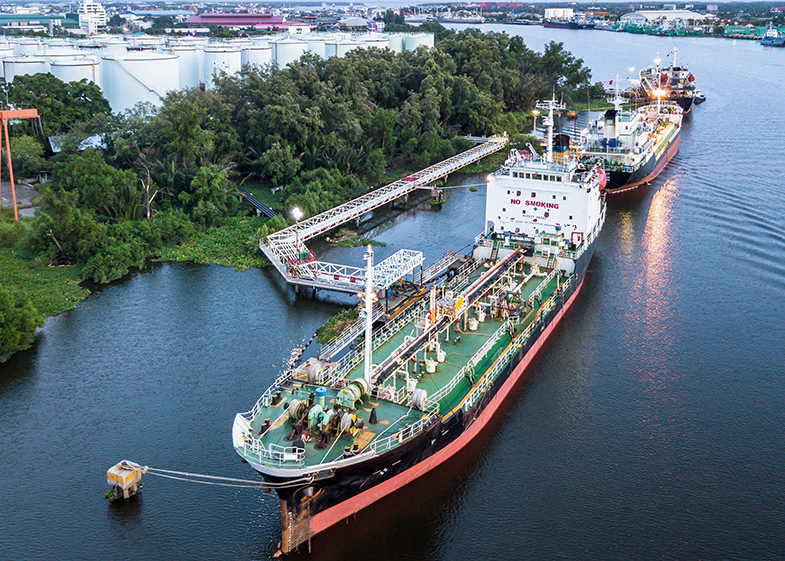
The shipping industry is a significant source of global greenhouse gas emissions, responsible for nearly 3% of global CO2 emissions in 2018 and roughly 11% of life-cycle transportation CO2 emissions in 20201. According to the International Council on Clean Transportation, maritime sector’s emissions are projected to increase by 16% by 2030 and a staggering 50% by 2050, unless policy and regulatory interventions are implemented2.
Stringent regulations are being introduced and implemented to limit carbon emissions and with the Paris Agreement temperature goals. The European Union’s Emissions Trading System (EU ETS) is expanding to include maritime emissions, and the FuelEU Maritime directive mandates the use of low-carbon fuels. These regulatory measures, coupled with growing consumer and investor demand for sustainable shipping, are driving the adoption of cleaner technologies and fuels.
The shipping industry is exploring various strategies to reduce its carbon footprint. Two primary approaches include retrofitting existing vessels with energy-efficient technologies and transitioning to low-carbon fuels. While both methods offer significant potential for emission reductions, fuel switching to low-carbon alternatives, such as biofuels and synthetic fuels, presents a more immediate and quantifiable solution.
Approved methodologies exist to calculate the emission reductions achieved through fuel switching. This allows for accurate measurement, transfer, and verification of the environmental benefits throughout the transport chain. While retrofitting can also lead to significant emissions reductions, the quantification of these benefits can be more challenging due to the lack of widely accepted methodologies.
A book-and-claim system is a mechanism that allows companies to track and claim the environmental benefits of low-carbon fuels used in transport. This system helps to ensure the transparency and integrity of environmental claims made about the use of low-carbon fuel. By purchasing and using low-carbon fuels, can reduce their emissions and demonstrate their commitment to environmental responsibility, as well as allow other stakeholders down the transport chain to claim environmental attributes of the consumed low carbon fuel.
To ensure the integrity and transparency of book-and-claim systems, it’s essential to adhere to best practices, including:
Additionality is a crucial concept in the context of low-carbon fuel programs. It refers to the additional environmental benefits generated by the use of low-carbon fuels beyond what would have occurred under business-as-usual conditions. In other words, it ensures that the use of low-carbon fuels is genuinely incremental and not simply replacing fuels that would have been used anyway due to regulatory requirements.
Upcoming regulations like EU ETS and FuelEU Maritime may impact the additionality of low-carbon fuels. The EU ETS imposes a cap on emissions, while FuelEU Maritime mandates the use of specific amounts of low-carbon fuels. While these regulations will drive the adoption of cleaner fuels, it is essential to carefully consider the potential impact on the voluntary market for low-carbon fuel credits.
With evolving regulations like FuelEU Maritime and EU ETS, adopting low-carbon fuel programs ensures compliance while also providing clear, quantifiable environmental benefits. Accurate verification of low-carbon fuel use supports transparent reporting, validating emission reductions and enhancing the credibility of sustainability claims.
Normec Verifavia brings over 10 years of experience in environmental verification, ensuring that your claims meet regulatory standards and reflect genuine decarbonization efforts.
References: