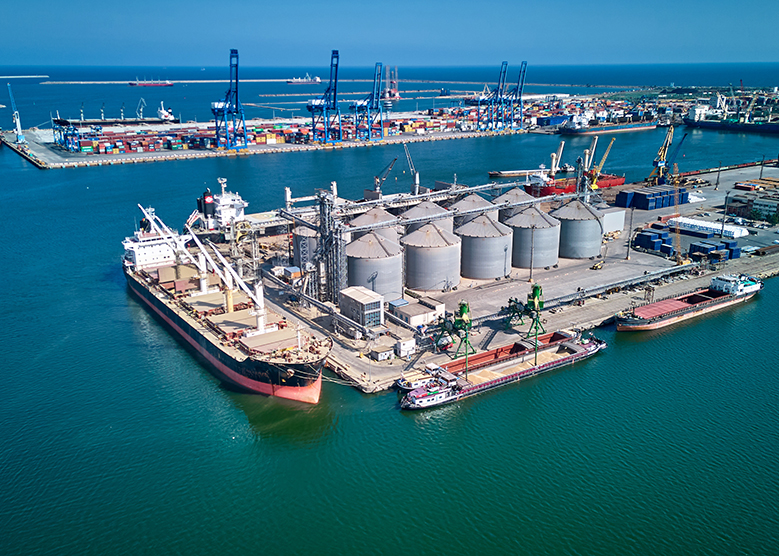
FuelEU Maritime
View this service

As the maritime industry moves toward compliance with the FuelEU Maritime Regulation [(EU) 2023/1805], understanding its scope and more importantly, its exemptions is critical. They have introduced several key exemptions to safeguard regional connectivity, especially for remote and economically sensitive regions.
The FuelEU Maritime Regulation’s Articles 2(3), 2(4), and 2(6) offer specific exemptions that consider the unique circumstances of routes and geographical regions. These provisions make sure that the overall objective of decarbonizing the maritime industry is met without sacrificing necessary connectivity and service provision in places that are more difficult to reach. These exemptions apply until December 31, 2029.
This article explores three such exemptions under Articles 2(3), 2(4), and 2(6) of the Regulation, with scenario-based interpretations drawn from the European Sustainable Shipping Forum (ESSF). These insights are intended for guidance purposes only and do not reflect the official position of the European Maritime Safety Agency (EMSA).
Compliance Flexibility and Mechanisms
A crucial component of the European Union’s “Fit for 55” climate initiative, the FuelEU Maritime Regulation [EU) 2023/1805], went into effect on January 1, 2025. In order to bring maritime transportation into line with the EU’s climate neutrality objectives, it seeks to lower the greenhouse gas (GHG) intensity of energy used on board ships operating within EU ports and waters.
FuelEU Maritime applies to commercial vessels over 5,000 GT, regardless of flag, when transporting cargo or passengers between EU ports. It excludes:
Article 2(3): Passenger Ships Serving Islands with Fewer Than 200,000 Residents
Scope: This exemption applies to passenger vessels (excluding cruise ships) operating between ports on islands with fewer than 200,000 residents within the same Member State, including energy used during port stays.
Applicable Countries: Croatia, Denmark, Finland, Greece, Italy, Malta, Portugal, and Spain.
Scenarios:
Scope: Applies to ships operating between ports located in EU-designated outermost regions, including energy used during their port stays.
The table outlines the EU Outermost Regions (OMRs), whose ports of call are considered part of the respective Member States for regulatory purposes under the Commission’s guidance.
| Member State | Outermost Regions |
|---|---|
| Spain | Canary Islands |
| France | Guadeloupe French Guyana Martinique Mayotte Saint Martin Reunion |
| Portugal | Madeira Azores |
Applicable Countries along with list of ports applicable: France, Portugal, and Spain.

Scope: This exemption applies to passenger vessels (excluding cruise ships) operating under a public service obligation (PSO) or public service contract, as defined under Regulation (EC) No 1008/2008 or similar national or Union-level legislation.
Applicable Countries: Croatia, Cyprus, France, Italy and Spain
Scenarios:
Important Clarification
While exempted voyages and port stays do not directly contribute to the FuelEU Maritime energy scope, the fuel used during these operations may still be included in the overall annual energy mix for compliance purposes. As such, operators must maintain detailed records and reporting to ensure accurate attribution and verification.
The FuelEU Maritime Regulation is a landmark step in the EU’s decarbonization roadmap. However, its carefully crafted exemptions —particularly under Articles 2(3), 2(4), and 2(6) demonstrate a clear awareness of regional disparities and service obligations across the EU. These exemptions are essential to preserving connectivity, ensuring affordability, and maintaining operational viability for maritime routes serving isolated or underpopulated areas.
For shipowners, operators, and regulators alike, understanding these nuances is essential for strategic planning, compliance management, and long-term investment in sustainable maritime operations. As the current exemptions are only valid until 31 December 2029, it is important that stakeholders do not treat this as a permanent relief. Instead, this transitional period should be used to implement the necessary systems, processes, and decarbonization strategies to ensure full compliance once the exemptions expire.
Disclaimer: This article is for guidance purposes only and includes interpretations from European Sustainable Shipping Forum (ESSF) discussions. It does not represent the official position of EMSA or the European Commission. References, such as OMRs, special routes, and exemptions, are based on EMSA-linked sources and may vary; please consult the official documents linked throughout for accurate, up-to-date information.